

Today it occurred to me, in getting used to thinking about LLMs in the framework of cultural technologies, that aside from the framework itself, one could lean into what has been said about other cultural technologies throughout time and try to extrapolate to LLMs.
One can do worse than start with what are arguably two of the most powerful cultural technologies of all time: the modern state and democracy. In all the works I have read dealing with these two, the author whose writing stands out the most for me is Robert Caro, a journalist and biographer who I admire greatly1.
Robert Caro on the power of government
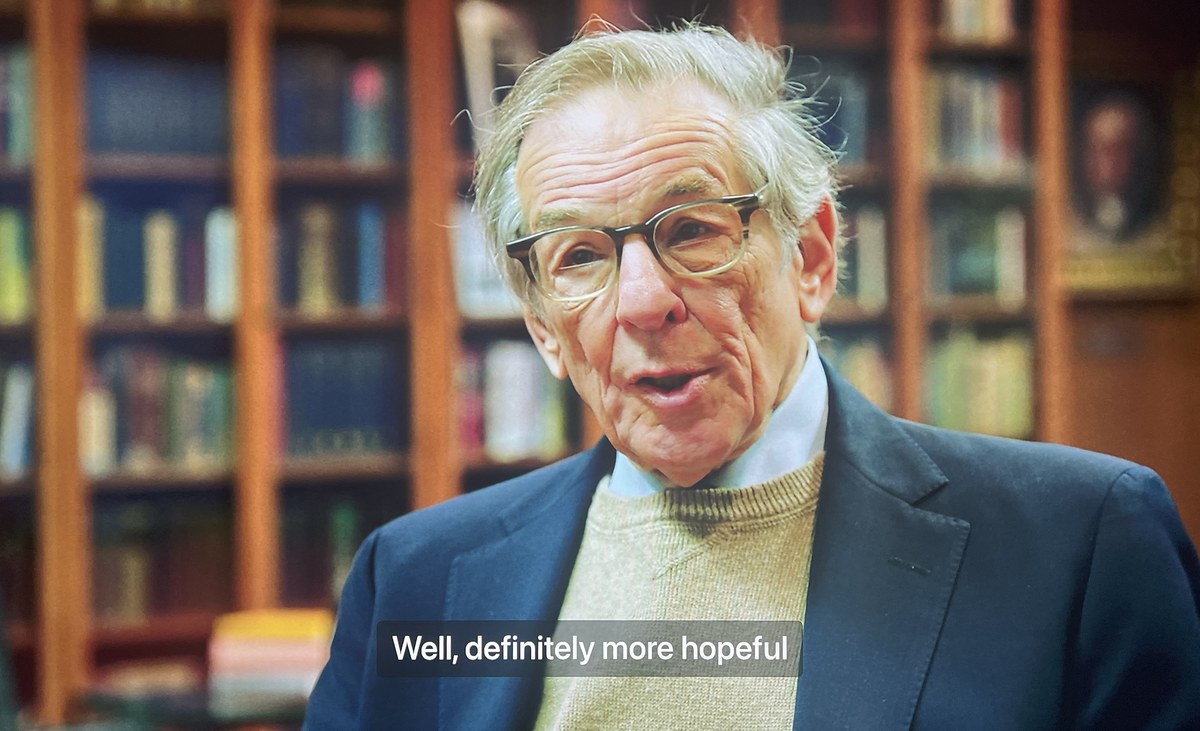
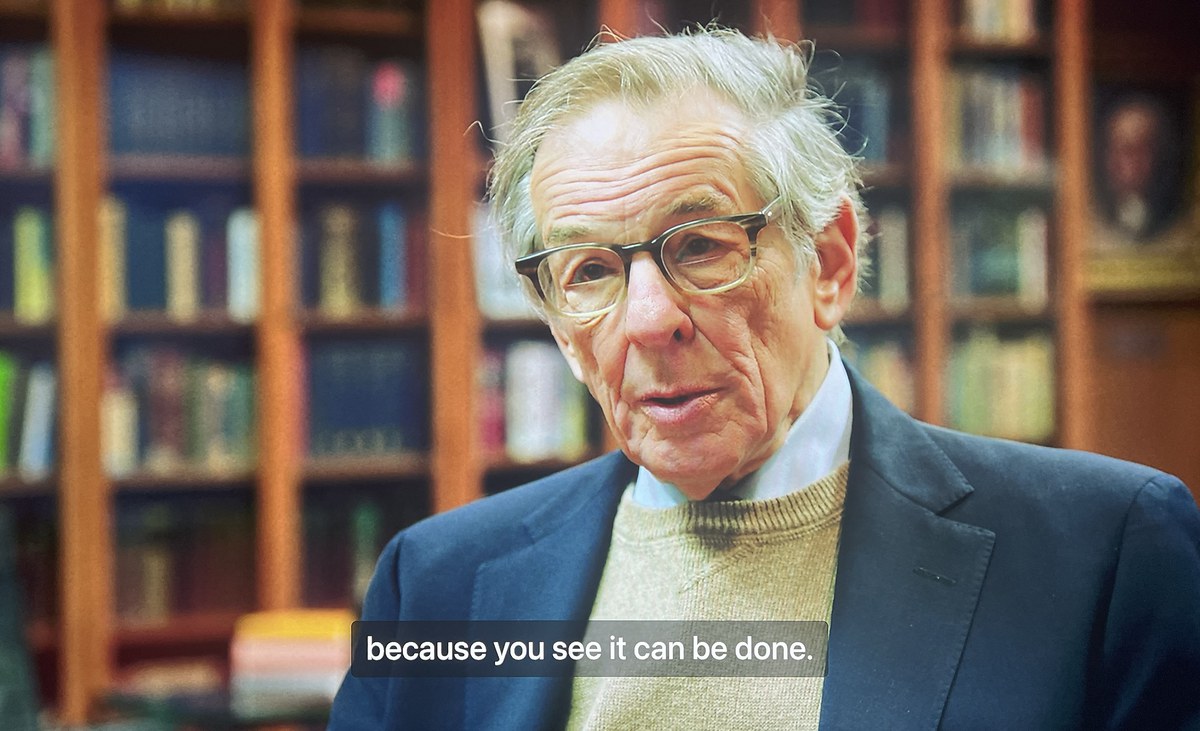
Robert Caro after Lizzie Gottlieb asks “does researching power like this make you more or less hopeful for our country?”. From “Turn every page: the adventures of Robert Caro and Robert Gottlieb”, a documentary by Lizzie Gottlieb
There is an important moment in the documentary “Turn every page”, near the end, where Caro has a long reflection about the good and the bad that a government can do. It is a bit long, and I think cutting it any shorter will take away a lot of the meaning, so here it is in full:
GOTTLIEB: Does researching power like this make you more or less hopeful for our country?
CARO: Good question. Well, definitely more hopeful because you see it can be done.
Right now I’m working on a section: “What was it like to be old and sick in America before Medicare and Medicaid?” And you have to put yourself into that, and you say, what was it like to be getting old and know you’re gonna be sick and not have any money?
Suddenly, there comes across a political genius. There’s no other word for it. A man who can take this legislation and pass it, and change and transform people’s lives for the better.
So you feel, yes, this can happen. It will happen.
That great saying, you know: “The moral arc of the universe is long, but it bends towards justice.” Well, I think it does bend towards… it does bend towards justice.
At the same time, because of Vietnam, you have this horrible feeling right now because the bottom line of what you’re reading about how they’re making the decisions to send all these troops to Vietnam, almost 600,000 men.
All these horrible casualties. The overall feeling you have is, look what government can do, the power of government, both for good, and you could say for ill.
I don’t know if you’re hopeful or in some ways more worried. You think of wars and the horror of wars, you know, “Let loose the dogs of war.” How easy it is for a great power to let that loose.
So you’re more in fear… Not in fear or in hope… but in awe of what government can do.
In my “Happy, those able…” essay, I wrote
Cultural technologies are powerful and awe-inspiring things. It is understandable that we tend to anthropomorphize them so often.
When I wrote “awe” here I was explicitly thinking of Caro saying the line above.
Consider how much what Caro says about government applies to markets, to bureaucracies, scientific fields, and cultural technologies in general. Whether they produce good or bad outcomes, cultural and social technologies can do big, awe-inspiring things.
I am curious what rereading Caro’s work with a cultural technologies perspective may reveal. The “Public Authority” for instance, so central to Robert Moses’ rise and a key part of Caro’s The Power Broker, is made possible by laws and bureaucracies.
Taking Large Language Models seriously
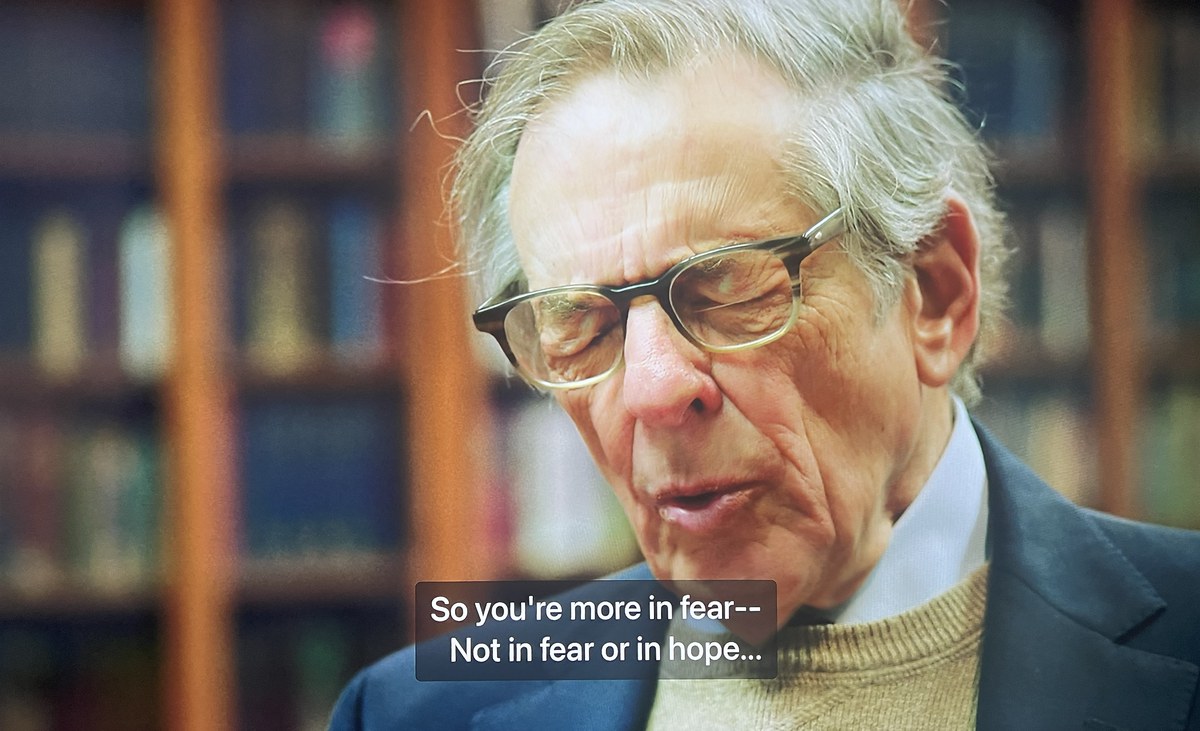
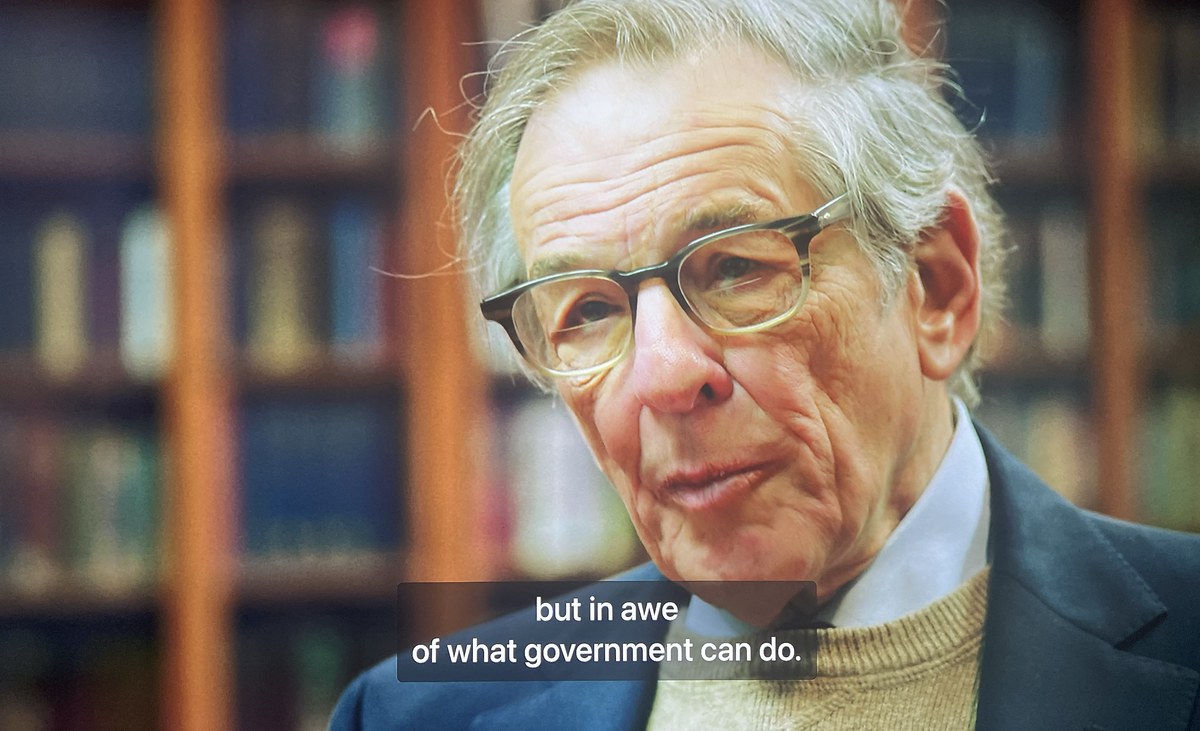
Robert Caro in “Turn every page: the adventures of Robert Caro and Robert Gottlieb”, a documentary by Lizzie Gottlieb
The reason I have been thinking about this is that I think the people at AI companies don’t take LLMs seriously, or they don’t take the implications seriously. The discussion of AI upsides/downsides coming from the AI companies might sound grandiose, but it is completely devoid of substance, and dominated by mysticism. Farrell and Shalizi note in this article for the Knight First Amendment Institute that the vision of LLMs coming from Silicon Valley relies too much on an outdated vision of the future based on SciFi from the 1990s.
A more recent example of the lack of substance came last week. We all saw the huge media attention bestowed upon an Anthropic employee after he resigned from the company for believing their products could “kill us all by the end of the decade”. This was later expanded by another Anthropic employee to the very serious claim that the probability of this happening is “greater than 10%” (and yet, this second employee does not appear to have resigned?!).
I will write this at greater length in the future, but for now, seeing what dominates the public discussion around LLMs makes me quite mad. These are not serious people. I see the very important topic of LLMs treated like a tool to game the attention economy to pump up an IPO price.
Meanwhile, the important discussions we should be having about LLMs – like the ones we have been having about governments, and markets, and bureaucracies for a long time – are not happening.
I said before that we must separate LLMs, the technology, from LLMs, the specific product sold by the big AI labs. The big AI labs and their push have made it harder to have these important discussions. We have to do so much preliminary work dispelling the mysticism and magical thinking they have dumped on the public conversation. Once we make this distinction clear to the public, we will be able to have the necessary conversations about this technology and the challenges it presents – and maybe even, with some luck, be able to experience some hope and some awe around the technology.
Despite all the vapid nonsense coming out of Silicon Valley, I am following Caro here and feel hopeful about the potential of LLMs. I am hopeful one day LLMs will be widely used for the betterment of humanity, and not for the enrichment of a small, unserious group of opportunists. I am hopeful because I see it can be done.
Footnotes
-
Those who know me well will note this is a great understatement. ↩