

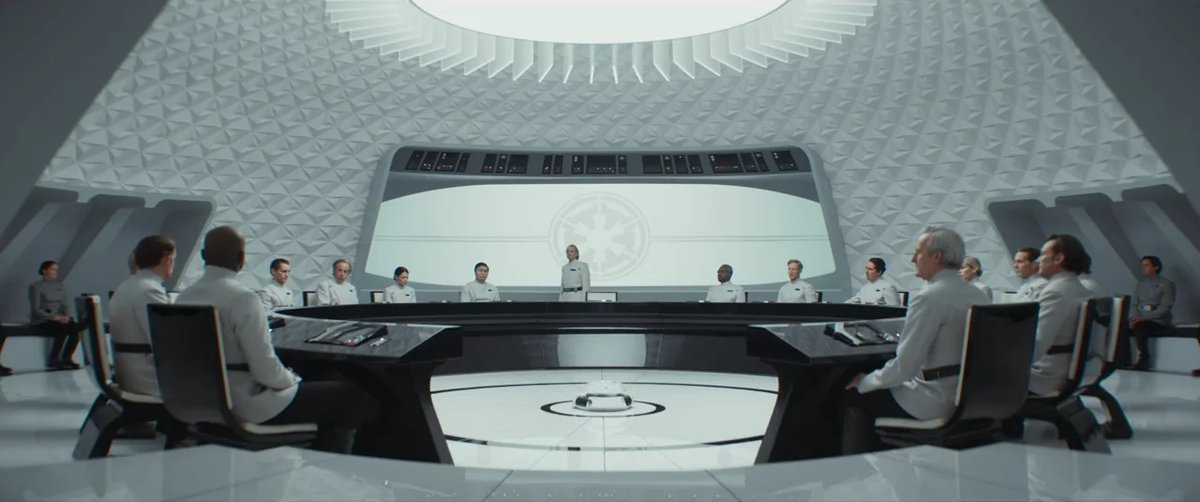
A typical work day at OpenAI
There is a new Advisory Group on Math and AI based at the IAS, announced yesterday. The announcement was quickly followed by OpenAI’s very own press release, which managed to instantaneously undermine the Advisory Group and its claim to independence. In short, OpenAI managed to turn the announcement of a new independent group about AI into a story about themselves. They wanted to make sure everyone knew that this independent group was originally kind of their idea, even though it went on to become something else. They also wanted to take the Advisory Group announcement as an opportunity to mention the “100 long-standing open problems” they have solved with their internal model, and they want us to know that they are being super responsible about it this time!
OpenAI’s frantic actions over the last few weeks (months? years?) are typical of what one sees in gold rushes. When considerable wealth hinges on events of great uncertainty, humans tend to get frazzled in their dash to get ahead of things. The dash and improvisation lead to chaos and confusion. Yesterday’s announcements fall under this.
A silver lining is that the actions of OpenAI for the last several weeks should be quite clarifying for mathematicians.
For many months now, mathematicians have had to deal with the externalities of having an inept and self-centered giant become obsessed with our profession and our work. What business motivation leads a company like OpenAI to inject itself into and meddle with the scientific process? Do they really need to solve the Hodge conjecture to convince their investors that their business model is sound? (the Hodge conjecture, the favorite open math problem of Wall Street?!)
One has to stop for a moment and review the situation to appreciate the absurdity of it all. Consider this: a quite reasonable claim even folks at OAI would agree with is that with a few more weeks of time, Buckmaster and Alpöge would have gotten a blow-up result similar to that announced by OpenAI earlier this month. By this I mean they certainly would have produced not just blow-up for the forced 3D Euler equations and the forced hypodissipative Navier-Stokes equations1, but more. A couple more weeks on top of that, and even a forced 3D Navier-Stokes blow-up could have been produced, and this is a claim that we can infer OpenAI agrees with in light of its behavior2. While a few dozen million dollars is not much money to OpenAI, at least it could have saved all that money if it had waited.
Why did they put in this effort? We all know advancing science is definitely not what OpenAI’s leadership had in mind with this. What about some other concern? I think everyone – in particular CFD3 folks – can agree the safety and well-being of humanity was not imperiled by a few extra weeks of not knowing if the forced Euler or Navier-Stokes equations blew up. To me, the fact that they did all this (the spend in compute, the infamous phone call) is a strong piece of information.
Argmaxin’ the IPO
The reason they did this (and this is said to have been made explicit in OpenAI’s now infamous call) is that OpenAI felt threatened by someone outside their company solving such a famous math problem – even if that someone was able to do this in part with the help of one of their products. They felt threatened by this because right now OpenAI, like all the other AI companies, is engaged in what is basically a large-scale PR operation towards its IPO. In fairness, this is the main job of the leadership at OpenAI, to maximize returns for their investors. The way to do this right now is to convince the public of the supposed extraordinary superiority of their products, and turn that into as large an IPO as possible.
At this moment and at OpenAI in particular, the leadership has convinced itself this PR operation can best be done by squeezing all the AI-hype news cycles it can out of mathematics. They see mathematics as some status symbol that speaks to a certain type of elite. The damage their squeezing might inflict on mathematics, on the mathematics community, and on science in general is none of OpenAI’s concern. Sam Altman is not here to make friends, advance human understanding of mathematics, support the arts, or cure cancer, no. Altman’s job – which he is quite good at! – is to maximize OpenAI’s IPO.
Say what you want about the tenets of IPO maximization, but at least it is an ethos: anything done in the name of this goal, any kind of collateral damage, is valid. The IPO number is the objective function and that’s what they are tuning their optimization for. That is, in fact, the one real “alignment problem” we ought to be discussing in the public sphere right now.
There is something else about this, the way OpenAI manages to behave recklessly in all its interactions with mathematicians: this is not the behavior of a company fully confident of the soundness of its business. I don’t think IBM was going around bullying Claude Shannon, nor do I think Texas Instruments tried to peek into Tinsley Oden’s computer looking for some insights on finite element methods.
I do not know if OpenAI’s leadership is afraid specifically of the rise of open-weight models, or of the abysmal approval numbers US voters have of their industry, or of the increased calls for addressing their concentration of wealth and influence through policy. Maybe it is some fourth or fifth other thing. Whatever the concrete fear here, the reason OpenAI is so desperate and behaves so recklessly to control the narrative is they must feel their current position is quite brittle.
Now, we come to OpenAI’s handling of yesterday’s announcement.
OpenAI’s need for control
I think everyone agrees the announcement of the board could have been clearer and more assertive in tone. I will give them the benefit of the doubt for now. It must be said that, elite credentials aside, the members of the board are still faculty with regular faculty duties, dealing with the demands and threats of a multibillion-dollar company in between having to write lectures, handling AI-slop submissions to journals, and reading through a blow-up in daily emails. In contrast, I imagine OpenAI must have a PR and communications team of several dozen people coordinating their every press release and pushing stories on the media – and for those people that’s their full-time job.
The bottom line is that here we had a group of mathematicians going out on a limb in order to create what was supposed to be an independent board, and OpenAI did not wait even a few hours to make their work virtually impossible. Again, giving everyone the benefit of the doubt, I will assume there was a clear agreement between both parties on the nature of the board’s independence. Incredibly, OpenAI, rather than being thankful there are still mathematicians willing to give it the time of day, could not resist going on a victor lap via press release. This document reads more like a declaration of conquest than what I believe is actually happening: OpenAI got spooked by the infinite bad press it has been getting since its attempt at making a PR gimmick out of the Navier-Stokes problem, and was now hoping to have a quieter and less contentious (to use a euphemism) release of its other PR gimmicks via famous math problems.
Not only does OpenAI make this off-putting press release, which is already undermining the very appearance of independence of the board; we also see a number of news articles with titles like “OpenAI forms math advisory group as its AI resolves more than 100 open problems” and “OpenAI’s new math advisory board has nine members and zero actual power” that incorrectly describe the board as being part of OpenAI. They have made themselves another PR circus, and brought down the Advisory Group into it.
I hope the Advisory Group gives us all tangible and convincing guarantees of its independence, and makes full demands of transparency on OpenAI: no more PR gimmicks. Javier Gómez-Serrano put it best in his talk at Harvard earlier this month: release the full process! (see Javi’s talk at 6:10). For the rest of us not on the board, the lesson is clear: OpenAI is not an organization that deserves our trust, and anyone who engages with it does so at their own risk.
These turbulent times can be revealing, and after things settle, we gain some clarity. We are gaining some understanding of how to proceed. On one side we have all mathematicians, with all their different views and perspectives, all unified by the love of mathematics. On the other side we have the empire and its very dedicated and hard-working personnel.
-
Per Buckmaster’s statement, the Lean verification for this was not done at the time of the announcement. My understanding is this Lean verification was completed days later. ↩
-
If they did not think Buckmaster and Alpöge were weeks away from doing this, they would not have spent several dozen million dollars (among other things alleged to have happened) to get ahead of them. ↩
-
CFD = Computational Fluid Dynamics. ↩